


Voice Translators: Pocket, Earbuds or Smartphone translator App – Which Is Best? How to choose?
Voice Translators: Pocket, Earbuds or Smartphone translator App – Which Is Best? How to choose? Tips and compare to make right decision! Buying guide - Are you looking for a translator for travel, conversations, or work abroad? A voice translator is a practical translation device for anyone who travels, works internationally, or needs to communicate without knowing a foreign language. A modern electronic translator is no longer limited to translating a single short sentence. It can help with conversations, reading text, translating restaurant menus, navigating abroad, or working with documents.
If you are looking for a travel translator, a vacation translator, or a translator for use abroad, it is important to choose the right type based on how you plan to use it. One model may be suitable for short travel‑related questions, another for longer conversations, and another for reading printed texts or books.
Contents:
- How does voice translator work?
- Offline vs online translator
- Translator device vs mobile app
- Cheap vs Expensive Translators
- Voice translator comparison table
- Which Type of Voice Translator Should You Choose?
- FAQ - frequently asked questions
- Final recommendations for choosing the right translator
How does voice translator work?
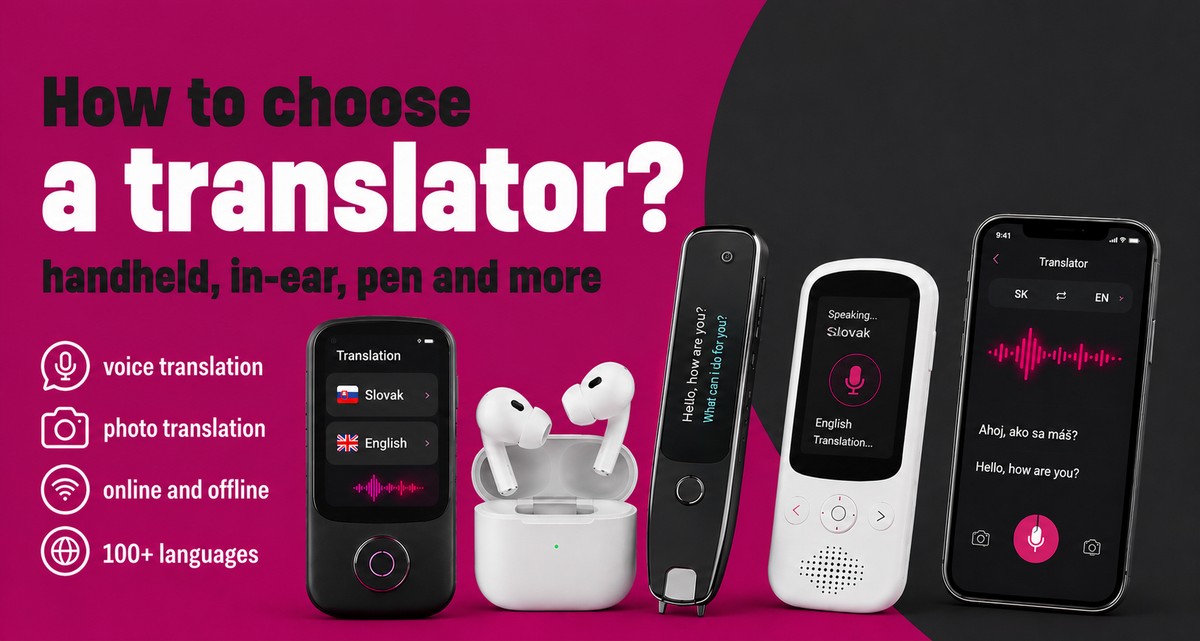
A voice translator works by recognizing spoken language, processing it, and translating it into the selected language. With a two‑way translator, communication can flow in both directions – one person speaks in their own language, and the other receives the translation in theirs.
A handheld translator typically includes a microphone, speaker, and display. The user speaks a sentence into the device, and the translation is either displayed on the screen or played back as audio. More advanced AI translators can use artificial intelligence, online language databases, offline language packs, photo‑to‑text translation, and in some cases can also function as voice recorders.
1. Handheld translator – a universal solution for travel
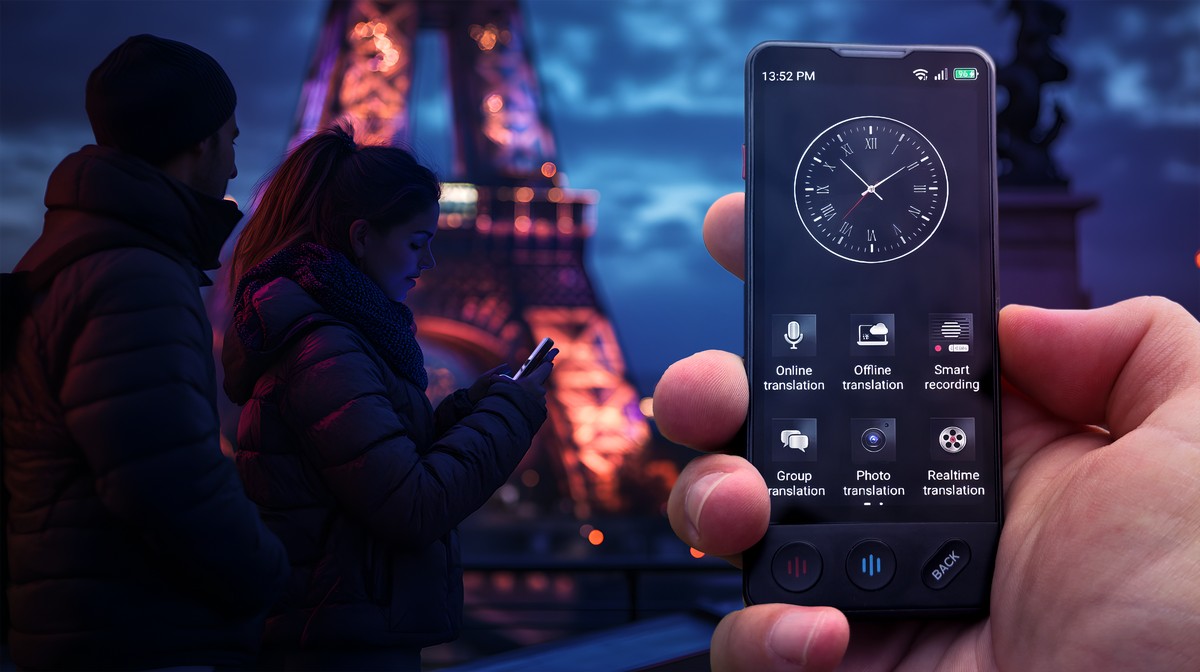
A handheld translator is the most versatile type of translator for everyday use. It is a portable translator or pocket language translator equipped with its own display, microphone, and speaker. It is suitable for travel, vacations, business trips, hotels, restaurants, shopping, and everyday communication abroad.
If you are looking for the best translator for travel or a practical translator for vacations abroad, a pocket translator is often the most balanced choice. It can help with short conversations, navigating unfamiliar environments, and basic communication without knowing the local language. It can also be an original and practical gift for family members, friends, or frequent travelers.
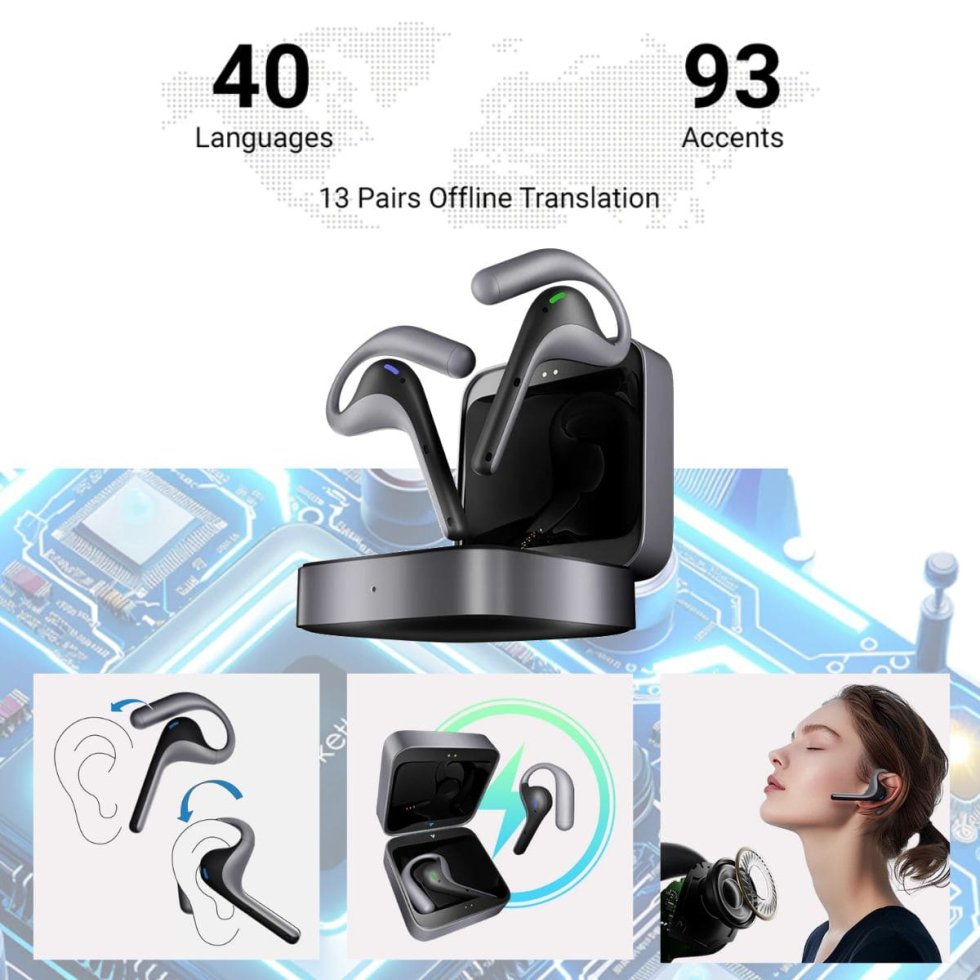
2. In ear translator earbuds – Ideal for Longer Conversations
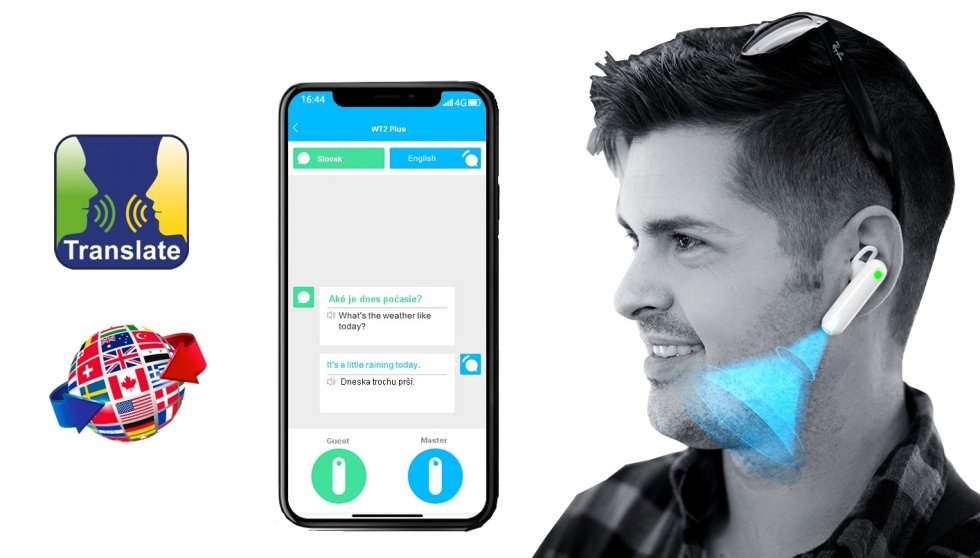
An in‑ear translator is especially useful when you expect to have longer conversations rather than translating only a few short sentences. The translation is delivered directly into your ear, making it convenient for extended discussions, business meetings, guided tours, or situations where you need to keep your hands free.
This type of device can function as a two‑way conversation translator, allowing each participant to hear translations in their own language. Its main advantage is more natural communication without the need to constantly hold a device in your hand. However, it is less practical for translating printed text, menus, signs, or documents.
3. Scanning pen and photo translator
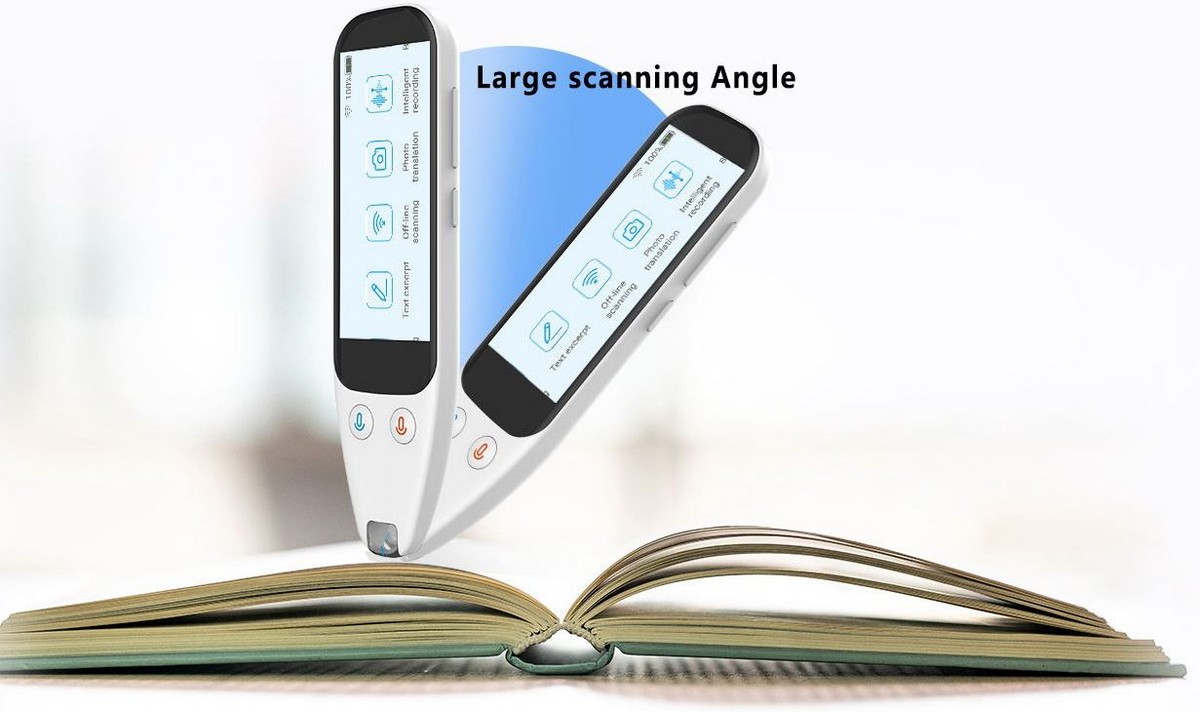
A scanning pen is a specialized translation device designed primarily for translating printed text. The user simply moves the pen across a line of text in a book, document, manual, or textbook, and the device recognizes and translates the content. It is particularly useful for students, professionals, and anyone who regularly works with foreign‑language documents, manuals, or educational materials.
A photo translator is especially practical when traveling. It can quickly translate restaurant menus, information boards, street signs, flyers, product packaging, and other printed materials using the device's camera. If you are looking for a translator for travel or vacations abroad, photo translation is a feature that is definitely worth considering.
Offline vs online translator
When choosing a voice translator, it is important to understand the difference between offline and online translation. At first glance, an offline translator may seem like a major advantage because it can work without an internet connection. However, offline translation is often limited by the size and quality of the language database stored on the device. Since it relies on preloaded words and phrases, translations may be less accurate and may struggle with new expressions, slang, technical terminology, or the natural context of a conversation.
For this reason, we generally do not recommend relying on offline translation as the primary translation method. It can be useful as a backup solution when internet access is unavailable, but for everyday communication, online translation typically provides much better results.
An online translator uses constantly updated language databases and translation systems. New words, phrases and language improvements are added regularly, allowing translations to be more natural, accurate and context‑aware. As a result, online translation is usually the better choice for travel, business communication and everyday conversations abroad.
When choosing an online translator, it is also important to check what type of internet connection it supports. Some devices work only through WiFi, which may be limiting when traveling. More practical models support a physical SIM card or eSIM technology, allowing internet access even outside hotels, airports or public WiFi networks.
Translator device vs mobile app
Many customers wonder whether it is better to use a dedicated translator device or a mobile translation app. Mobile apps can be useful for occasional translation of individual words or short phrases. However, if you need translation regularly, a dedicated voice translator is usually the more convenient solution. A standalone translator is worth considering if you travel frequently, need fast and reliable communication, do not want to constantly unlock your smartphone, or prefer a device designed specifically for translation. Dedicated electronic translators can also be more user‑friendly for seniors and people who do not want to rely on mobile applications.
Many modern pocket translators offer excellent translation quality by combining multiple language‑processing technologies, translation engines and language databases. As a result, they often provide faster and more accurate translations in real‑world conversations.
AI translators – a modern solution for multiple functions
AI translators use advanced language‑processing technologies and can offer significantly more features than basic electronic translators. In addition to voice translation, many AI‑powered translators support photo translation, language learning, real‑time conversation translation, group communication and intelligent assistance for various travel, business and everyday situations.
When comparing AI translators, it is important to consider more than just the number of supported languages. Other key factors include ease of use, microphone quality, internet connectivity options, battery life and support for voice, text and photo translation. Choosing the right combination of features will help ensure that the translator meets your specific communication needs.

Cheap vs Expensive Translators
When choosing a translator, many people wonder how much a translator device costs and whether a premium model is worth the higher price. The main differences between budget and premium translators are usually found in microphone quality, translation speed, language support, internet connectivity options, display quality, battery life and additional features.
A budget translator may be sufficient for occasional use or short trips. However, if you travel frequently, work abroad or rely on translation for everyday communication, it is worth paying attention to reliability, accuracy and overall user experience. Premium translation devices often provide faster responses, better voice recognition and more advanced translation features, making them a more practical long‑term investment.
Voice translator comparison table
| Translator type | Main advantage | Disadvantage | Suitable use |
| Handheld Voice Translator | Versatile, includes display, microphone and speaker | Larger than earbuds | Travel, vacation, work abroad |
| In-ear translator | Comfortable for longer conversations | Less practical for quick translations |
|
| Scanning pen | Excellent for printed text | Not ideal for live conversations | Books, documents, textbooks |
| Photo translator | Translates menus, signs and printed information | Depends on camera and image quality | Travel and navigation |
| Online translator | More accurate and natural translation | Requires internet access | Everyday communication abroad |
| Online translator with SIM/eSIM | Works outside WiFi networks | Requires mobile data coverage | Travel, vacation, commuting |
| Offline translator | Works without internet access | Limited vocabulary and database | Emergency situations |
| AI translator | Advanced features and intelligent translation | Higher price | Travel, work, study |
| Mobile Translation App | Affordable or free | Requires a smartphone | Occasional translation |
Which Type of Voice Translator Should You Choose?
Choose a handheld voice translator if: You need a versatile device for travel, vacations, work abroad, conversations, photo translation and everyday communication in foreign languages.
Choose an in‑ear translator if: You frequently participate in longer conversations and want to hear translations directly in your ear. This type is ideal for conversations but less practical for translating printed text, signs or documents.
Choose an online translator with SIM or eSIM support if: You need a translator for travel, vacations or work abroad and want internet access even when WiFi is unavailable. Models with SIM or eSIM support can connect through mobile networks, making them more flexible while traveling.
Use an offline translator if: You are traveling in an area without internet access and need basic translations of simple words or phrases. Offline translation is best viewed as a backup solution rather than a primary translation method.
Choose an AI translator if: You want advanced features such as voice translation, photo translation, language learning assistance, real‑time conversation translation and intelligent language support.
Choose a scanning pen if: You mainly translate books, manuals, documents, textbooks or other printed materials.
FAQ - frequently asked questions
How does voice translator work?
The voice translator recognizes spoken language, processes it, and translates it into the selected language. The result is displayed on the display or played through the speaker as an audio translation.
How does a pocket translator work?
A handheld translator functions as a standalone translation device. It has its own microphone, speaker, and often a display. The user speaks a sentence into the device, and the translator displays or plays the translation.
Which voice translator is best for me?
It depends on the use. A universal pocket translator is suitable for traveling, an in-ear translator for longer conversations, a scanning pen for documents, and an online translator with a SIM or eSIM for frequent travel.
What is the best translator for travel and vacations?
The best translator for vacation or travel is one that can handle regular voice translation, photo translation of menus and signs, and ideally has the ability to connect online even outside of a WiFi network. A pocket translator is especially practical.
Is a translator device better than a mobile app?
The mobile app is sufficient for occasional use. A standalone translation device is more practical for frequent travel, longer communications, or for users who don't want to use their phone all the time.
Is it worth buying a voice translator device?
Yes, if you travel frequently, work abroad, or need to communicate in a foreign language and are not a tech-savvy user. A standalone device designed specifically for translation has the advantage of being easy to use and works without the need for a mobile connection.
Is an offline translator better than an online translator?
No. An offline translator works without internet access, but it relies on a limited database of words and phrases stored on the device. Therefore, translations may be less accurate and less natural. We generally recommend online translation more because the databases are constantly updated and improved.
When does an offline translator make sense?
An offline translator is mainly useful as an emergency solution in a situation where you don't have access to the internet. It's good for basic words or simple phrases, but for everyday conversation, traveling, or working abroad, we recommend online translation.
Why is online translation more accurate?
Online translation uses continuously updated language databases and translation systems. New words, phrases, and translation corrections are processed continuously in the background, making online translation more natural and more responsive to real-world communication.
Is WiFi-only connectivity sufficient for a translator?
For occasional use at home, in a hotel or in the office, WiFi may be sufficient. However, for traveling, it is more practical if the translator also supports a SIM card or eSIM. Then you can connect to the Internet even outside of a WiFi network. Everything happens automatically in the background without your intervention.
Is a translator with SIM/eSIM better than a WiFi-only translator?
A translator with a SIM card or eSIM is better for traveling because you are not dependent on WiFi availability. If you plan to use the translator on vacation, in the city, in a taxi, restaurant, or when moving outside of a hotel, SIM/eSIM support is a big advantage.
What is an offline translator?
An offline translator is an offline mode or device that allows basic translation without WiFi or mobile data. However, it should be noted that this is only a limited database of words and phrases.
Is an in-ear translator good for conversations?
Yes. An in-ear translator is very suitable for longer conversations because you hear the translation directly in your ear and you don't have to hold the device in your hand all the time.
What is an AI translator?
An AI translator is a modern electronic translator that uses advanced language processing and can offer voice translation, photo translation, language learning, or other intelligent functions.
How much does a voice translator cost?
The price depends on the type and features. Basic models tend to be cheaper, while premium AI translators or devices with photo translation, SIM/eSIM support, and a better display are more expensive.
What is the difference between a cheap and a premium translator?
The difference lies in the quality of the microphone, translation speed, number of languages, internet connection, display, battery, photo translation, and overall comfort of use.
Final recommendations for choosing the right translator
When choosing an electronic translator, the most important factor is how you plan to use it. A handheld voice translator is the most versatile option for travel, vacations, conversations and photo translation. An in‑ear translator is particularly suitable for longer conversations, while a scanning pen is ideal for books, documents and other printed materials.
When comparing online and offline translation, we recommend focusing on real‑world usability. Offline translation can be useful in emergencies, but it is limited by the language database stored on the device. For everyday communication, online translation is generally more accurate and natural. Ideally, choose a translator with SIM card or eSIM support so you are not dependent solely on WiFi connectivity.
If you are looking for a translator for travel, work abroad or communication in foreign languages, the most practical solution is a device that combines voice translation, photo translation, online connectivity and easy operation. From our product range, the Langie S3 translator is a versatile option that can handle a wide variety of travel, business and everyday communication scenarios.
➜ See all Cool-mania voice and electronic translators

CEO of the Cool Mania e-shop, who has been building this brand since 2010 and and gradually developing it into an international online business. As an entrepreneur, founder and long-time manager, he has practical experience in the field of e-commerce, product selection, international sales and company development. In his business, he builds on continuous education, following trends and the ability to adapt to changes.



 We also try to help those in need
 We won the prestigious Shop of the Year award from Heureka
 You have been shopping with us reliably and safely for 15 years
 We are internationally certified to ISO 9001