


How to Choose a Car Reverse Cameras – Wireless, Wired, Solar or Mobile?
How to Choose a Car Reverse Cameras – Wireless, Wired, Solar or Mobile? Compare WiFi backup (parking) cameras and choose best right parking system. Buying guide - today, a reverse camera is no longer an accessory reserved only for new cars. It can also be installed in older vehicles, vans, caravans, trucks, buses, tractors, excavators and other work machines. A reverse camera helps with parking, reversing, loading and maneuvering in tight spaces, while improving overall safety and visibility.
Cool‑mania offers a wide range of reversing and parking cameras, including WiFi reverse cameras with monitors, wired reverse camera systems, VGA cameras, FULL HD / HD / AHD reverse cameras, WiFi parking cameras for mobile phones, reverse cameras for vans, LCD car monitors and various accessories. A car reverse camera is a practical assistant for everyday parking and reversing.
A back up cameras improves visibility behind the vehicle, helps reduce blind spots and gives the driver greater confidence when maneuvering. Unlike a front‑facing car camera, its main purpose is to provide a clear view of the area behind the vehicle. However, when choosing a reverse camera, price should not be the only factor. It is important to determine whether you need a wireless reverse camera, a wired rear view camera system, a reverse camera with a monitor, a camera connected to a mobile phone, a solar‑powered reverse camera, or a professional parking camera kit for a van, truck or commercial vehicle.
Contents:
- Basic types of reverse cameras
- Reversing sets - camera with monitor, display or rearview mirror
- Single camera or multi camera reverse system (1-4 cameras)?
- Reverse Camera Resolution – VGA, HD or FULL HD?
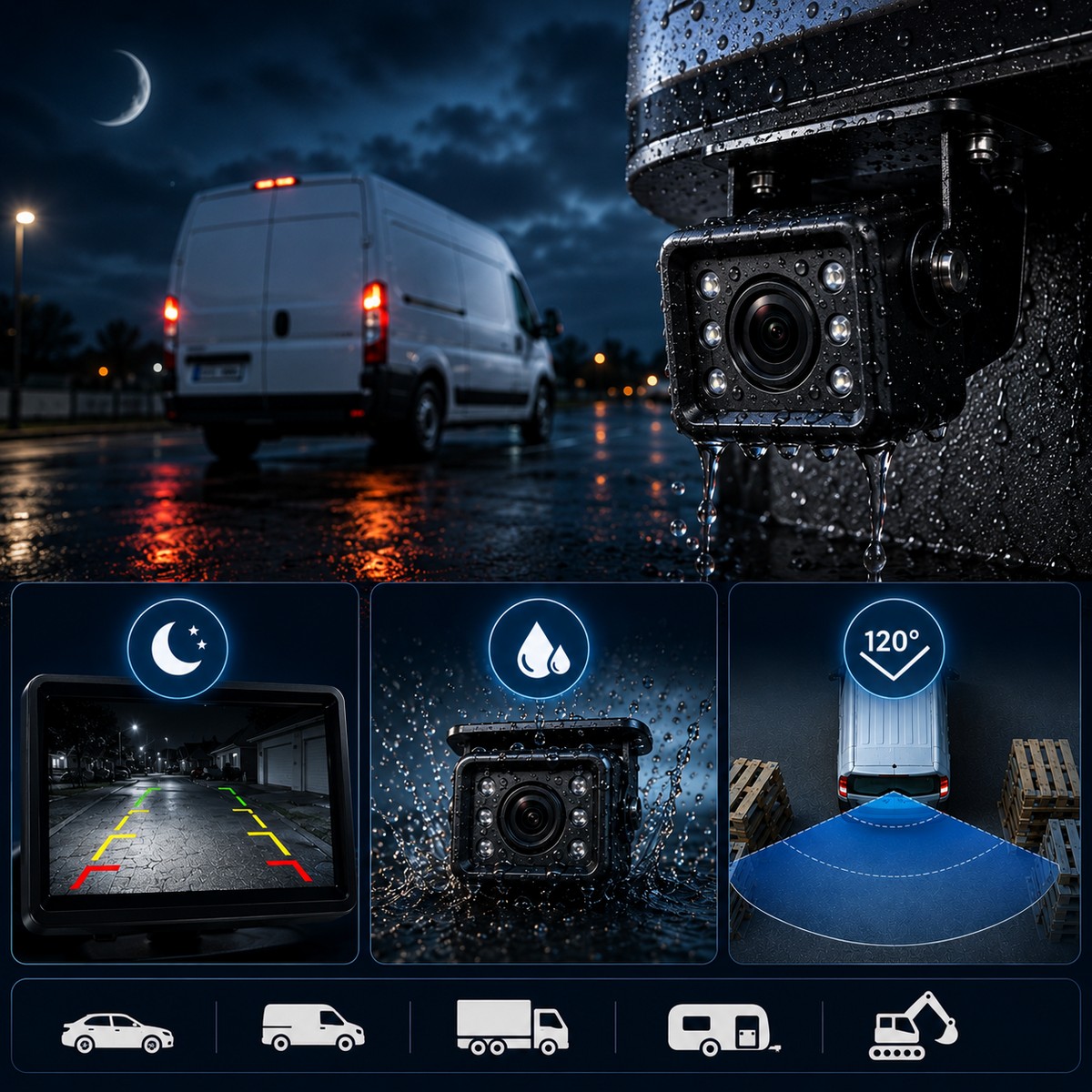
- Night Vision, Waterproof Rating and Viewing Angle Explained
- Reverse camera vs parking sensors
- Installing a reverse (backup) camera
- Comparison of Reverse Camera Systems (advantages/disadvantages)
- The most common mistakes when choosing a reverse camera
- FAQ - frequently asked questions
- Final tips for choosing the right car reverse camera
Basic types of reverse cameras
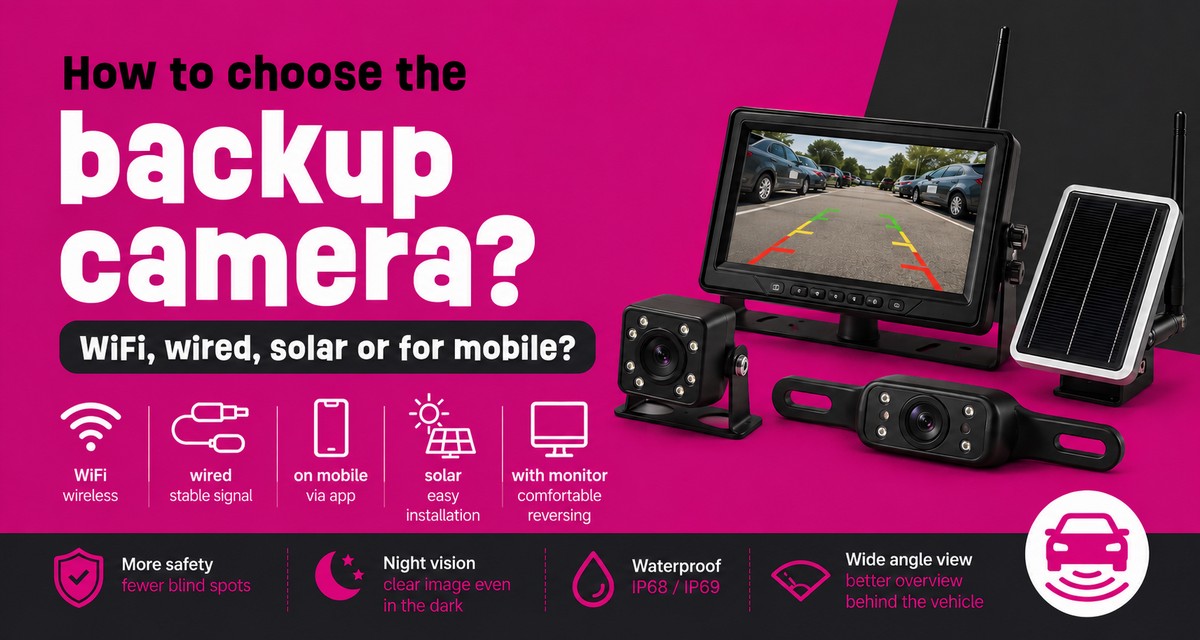
1. WiFi backup reverse camera
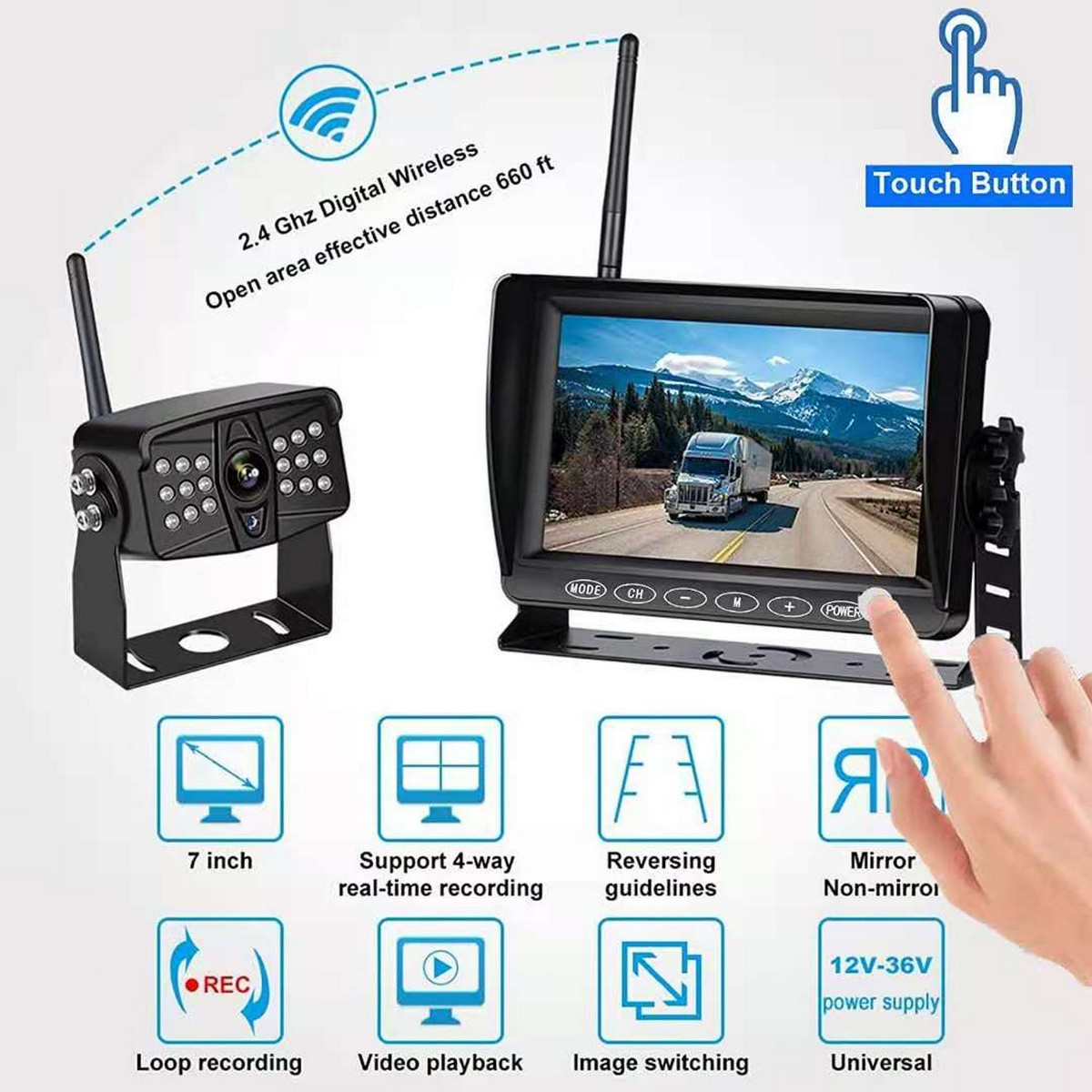
2. Wired backup reverse camera
3. Reverse camera for mobile phone

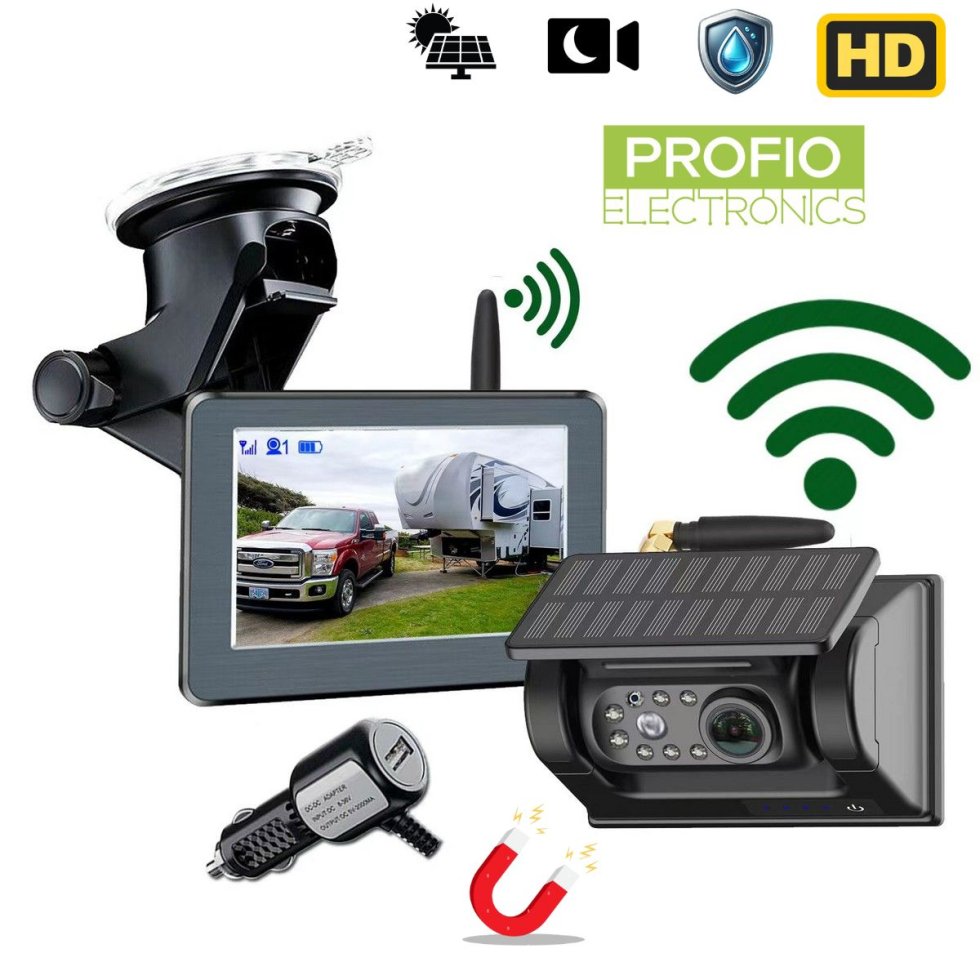
4. Solar reverse (backup) camera with monitor
Reversing sets - camera with monitor, display or rearview mirror
When choosing a reversing camera system, it is important to decide where you want to view the camera image. Some drivers only need a smartphone, while others prefer a car LCD monitor or a display integrated into the rearview mirror.
- 5" monitor: Suitable for passenger cars and basic parking camera systems. It takes up very little space and provides a clear view when reversing.
- 7" monitor: The most versatile monitor size. Suitable for most cars, vans and standard reverse camera systems. Our range includes WiFi, HD and AHD reverse camera kits with a 7" LCD monitor.
- 10" monitor: Recommended for larger vehicles such as vans, trucks, buses and vehicles equipped with multi‑camera systems. The larger display provides a better overview of the surroundings.
- Rearview mirror display: A practical solution that saves dashboard space and allows the driver to view the image in a natural position without installing an additional screen.

Single camera or multi camera reverse system (1-4 cameras)?
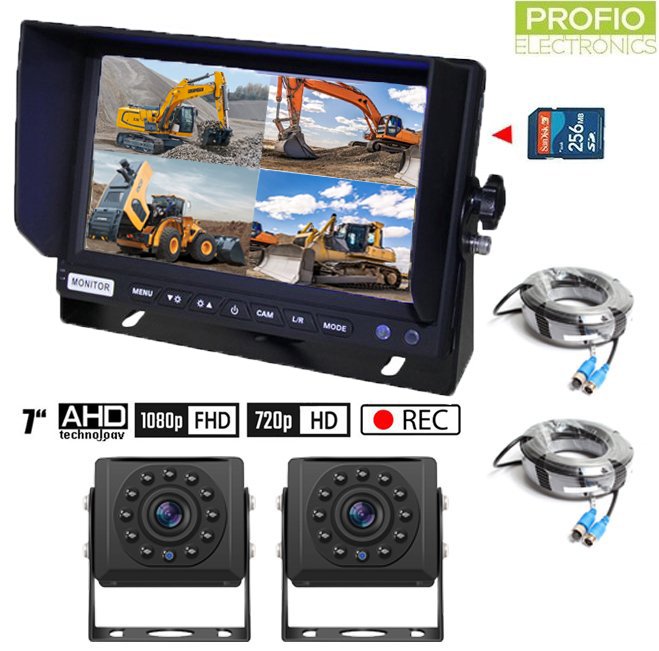
For most passenger cars, a single rear‑facing reverse camera is sufficient. However, for larger vehicles such as vans, caravans, trucks, buses, tractors or construction machinery, a multi‑camera system may be a better solution. Multi‑camera systems, available in both wired and wireless versions, can support up to 4 cameras. Additional cameras provide a wider view around the vehicle, help eliminate blind spots and improve safety when reversing or maneuvering in confined spaces. However, multi‑camera systems are generally more expensive, require more complex installation and may require a larger monitor.


Reverse Camera Resolution – VGA, HD or FULL HD?
AHD is not a resolution itself. It is a video transmission standard that supports higher‑quality analog image transmission. Depending on the specific model, an AHD back up camera may provide HD or FULL HD image quality.
- VGA reverse camera: VGA is an older video standard with lower image quality. It can still be sufficient for basic reversing tasks, but it provides less detail than modern camera systems.
- HD AHD reverse camera: HD AHD offers a good balance between image quality and price. It is suitable for everyday use and provides noticeably sharper images than VGA systems.
- FULL HD AHD reverse camera: FULL HD AHD delivers greater image detail and is particularly suitable for larger vehicles, professional applications and multi‑camera systems.
When choosing a reversing camera, it is important to consider not only the price but also the image quality and transmission technology. While VGA cameras can still be used for basic applications, modern HD AHD and FULL HD AHD systems provide significantly clearer and more detailed images.
Night Vision, Waterproof Rating and Viewing Angle Explained
- Night vision: improves visibility when reversing at night, inside garages, during loading operations or in poorly lit environments.
- Waterproofness: Because parking cameras are installed outdoors, they must withstand rain, dust, mud, snow and vibrations. Cool‑mania also offers models with IP68 and IP69 protection ratings for increased durability.
- Wide angle view: A wide‑angle reverse camera provides a broader field of view behind the vehicle, helping reduce blind spots and improving overall reversing safety.
Reverse camera vs parking sensors
Installing a reverse (backup) camera
The installation process depends on the type of back up cameras system. WiFi (wireless) and solar‑powered reverse cameras are generally easier to install because they do not require a long video cable to be routed through the vehicle. Wired reverse camera systems require more installation work but provide a more stable video signal.
The camera is most commonly installed above the license plate, near the license plate light, on the rear door, on the bumper or in a higher position on vans, trucks and commercial vehicles. During installation, it is important to consider the viewing angle, cable protection, power supply, waterproofing and overall placement so that the camera does not interfere with normal vehicle operation.
Comparison of Reverse Camera Systems (advantages/disadvantages)
| Solution type | Main advantage | Disadvantage | Suitable use |
| WiFi (wireless) reverse camera | Less wiring, easier installation | Possible signal interference | Passenger cars, vans, caravans |
| Wired reverse camera | Stable and reliable image | More complex installation | Professional use, vans, trucks |
| Reverse camera for mobile phone | No separate monitor required | Depends on smartphone and app | Occasional use |
| Solar reverse camera | Minimal modification to vehicle wiring | Depends on battery and sunlight | Easy installation, license plate cameras |
| Reverse camera with monitor | Convenient image viewing | Monitor occupies interior space | Everyday use |
| Rearview Mirror Camera Display | Saves dashboard space | Smaller display area | Passenger cars |
Choose a WiFi reverse camera if: You want easier installation, less wiring and the option to view the image on a monitor or smartphone.
Choose a wired reverse camera if: You need a stable video signal and use your vehicle regularly or professionally.
Choose a reverse camera for a mobile phone if: You do not want a separate monitor and only need the camera occasionally.
Choose a solar reverse camera if: You want quick installation and minimal interference with the vehicle's electrical system.
Choose a reverse camera with a monitor if: You want a convenient solution for everyday reversing without relying on a smartphone.
Choose a rearview mirror display if: You want to save dashboard space and avoid installing an additional monitor.
Choose a multi‑camera system if: You drive a van, caravan, truck, bus, tractor or work machine and need visibility around multiple sides of the vehicle.
Choose an HD AHD or FULL HD AHD system if: You want a sharper and more detailed image than older VGA camera systems can provide.
The most common mistakes when choosing a reverse camera
When purchasing a reversing camera, price should not be the only deciding factor. While a basic universal rear view camera may be sufficient for occasional use, vehicles such as vans, trucks and work machines require greater attention to image stability, resolution, waterproofing, night vision and monitor size.
A common mistake is choosing an older VGA camera system while expecting HD image quality. Another frequent mistake is selecting a monitor that is too small for a large vehicle or choosing a camera without sufficient IP‑rated protection against water and dust.
A rear view camera is an excellent aid for parking and maneuvering, but it does not replace the driver's attention. Always monitor your mirrors, vehicle surroundings and traffic conditions when reversing. The camera helps reduce blind spots, but the driver remains fully responsible for safe vehicle operation.
FAQ - frequently asked questions
Which reverse (backup) camera is best for a car?
For most passenger cars, an HD AHD reverse camera with a monitor is sufficient, whether you choose a wired or wireless version. For larger vehicles / trucks / work machines, we recommend a multi-camera system.
Is a WiFi or wired backup camera better?
A WiFi parking cameras is easier to install and requires less wiring. A wired reversing camera is more stable and more suitable for professional use, vans, trucks or work machines.
Is a reverse (parking) camera with a monitor better than a mobile phone camera?
For everyday use, yes. A back up camera with a monitor is more convenient because you always have the image ready on the display. A reversing camera connected to a smartphone is generally more suitable for occasional use, as you need to open the mobile application to view the camera feed.
Is a wireless car reverse camera worth it?
Yes, if you want an easier installation and don't want to run a long cable through the vehicle. However, for professional use, a wired solution may be more stable.
Is a solar reverse camera worth it?
Yes, if you want easy installation and minimal intervention in the electrical installation. However, you need to take into account the battery capacity and adequate lighting conditions for recharging the camera.
What does AHD parking backup camera mean?
AHD stands for Analog High Definition and is a transmission standard used to deliver higher-quality analog video signals. AHD is not a separate resolution, but the standard, depending on the specific model, can be HD AHD or FULL HD AHD camera.
Is a VGA or AHD reverse camera better?
An AHD camera is a better choice if you want a higher quality image. VGA is an older standard with lower resolution. AHD systems can offer HD or FULL HD quality depending on the specific model.
Which monitor to choose for the reverse camera?
For a passenger car, a 5" or 7" monitor is sufficient. For larger vehicles, vans, or multi-camera systems, a 7" or 10" monitor is more suitable.
Where to place the rear view camera?
It is most commonly installed above the license plate, near the license plate light, on the rear door, on the bumper or in a higher position on vans, trucks and work vehicles.
Is a reverse camera better than parking sensors?
A reverse camera with a monitor will display a real image behind the vehicle, while sensors will only warn of an obstacle with sound. It is ideal to combine both, but the camera will provide the driver with more visual information.
Final tips for choosing the right car reverse camera
When choosing a reverse camera, the most important factors are the type of vehicle, your intended use and how often you will use the system. For passenger cars, a basic reverse camera, smartphone‑connected camera, solar‑powered camera or rearview mirror display may be sufficient. For vans, caravans, trucks, buses and work machines, we recommend a higher‑quality WiFi or wired back up cameras system with a dedicated monitor.
If simple installation is your priority, a WiFi or solar reverse camera is an excellent choice. If maximum image stability is more important, a wired reverse camera system remains the best option. Regarding monitors, a 7" display is the most versatile choice, a 5" monitor is compact and space‑saving, while a 10" monitor is ideal for larger vehicles or multi‑camera systems.
For image quality, we recommend choosing HD AHD or FULL HD AHD systems whenever possible. AHD is a high‑definition analog video transmission standard that can deliver either HD or FULL HD image quality, depending on the model. While older VGA reverse cameras may still be suitable for basic applications, higher‑resolution systems provide noticeably better visibility and are especially beneficial for larger vehicles and professional use.
➜ View all Cool-mania reverse cameras
➜ See article: GPS tracker for car: How and which GPS locator to choose based on features?

CEO of the Cool Mania e-shop, who has been building this brand since 2010 and gradually developing it into an international online business. As an entrepreneur, founder and long-time manager, he has practical experience in the field of e-commerce, product selection, international sales and company development. In his business, he builds on continuous education, following trends and the ability to adapt to changes.



 We also try to help those in need
 We won the prestigious Shop of the Year award from Heureka
 You have been shopping with us reliably and safely for 15 years
 We are internationally certified to ISO 9001